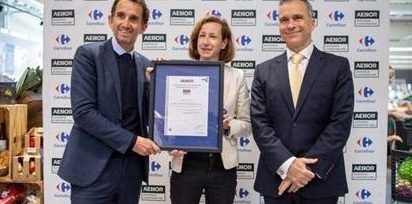
Carrefour certified by AENOR in Zero Food Waste
Carrefour is the first distribution company certified by AENOR in Zero Food Waste
Carrefour's commitment to reducing food waste
Carrefour has become the first distribution company in Spain to obtain the AENOR Zero Food Waste certification. A commitment to sustainability, social responsibility and respect for the work of millions of people involved in the production, distribution and consumption of food and that connects them as a company with the end consumer.

Among the aspects evaluated by AENOR are the prevention and quantification of food waste, efficient waste management and commitment to continuous improvement. All this applies to the sale of food to the public in all its formats. This seal distinguishes the effectiveness of the measures implemented by Carrefour to contribute to the reduction of food waste.
Zero Food Waste
The certification guarantees efficient management to reduce waste and promote sustainable food.
Request informationCarrefour Food: Quality and Food Safety
In addition to the concern for Food Waste, CARREFOUR pays special attention to maintaining high levels of quality and food safety in all its centres. CARREFOUR periodically carries out quality and food safety audits in its stores, in which aspects such as good handling practices, shelf temperatures or cleaning and disinfection are reviewed. During the audit, samples of surfaces and food are taken and then analysed in specialised laboratories. AENOR has been carrying out this work since 2021, with a large team of auditors specialised in food quality and safety.
Carrefour as a leader in sustainable transformation
Carrefour Food has made a firm commitment to the fight against food waste. Over the years, it has implemented various initiatives to reduce the amount of food that goes to waste.
Carrefour is an ally in the fight against food waste and a defender of the environment. Their commitment and concrete actions make a difference in the industry and inspire us all to be more responsible with our resources.
The distributor has delivered 975 tonnes of surplus food to food banks in Spain during 2023. In addition, customers can find Zero Food Waste refrigerators inside Carrefour stores with food close to the expiration date, in perfect condition and at 50% of its price.
In addition, with "Carrefour zero waste", the company has committed to reducing CO2 emissions by 40% by 2025 and by 50% by 2050.
Carrefour and the AENOR Zero Food Waste Certification
Food waste is a global problem with environmental, social and ethical consequences. Carrefour has obtained the Zero Food Waste Certification from AENOR. This certification allows Carrefour to:
-
Convey confidence to customers and consumers about your commitment to and management of food waste.
-
Quantify waste, as well as establish specific goals for its prevention and minimization, and evaluate the effectiveness of its management.
-
Increase the efficiency of your production system and improve costs.
-
Align their objectives with European circular economy strategies.
-
Contribute to the fulfillment of SDGs, such as SDG 12 "Ensure sustainable consumption and production patterns" and specifically, SDG 2 "Zero hunger".
Zero Food Waste also recognises those organisations that prioritise good management and value the different fractions of waste they generate, within the defined scope, avoiding landfilling. The company not only strives to minimize food waste, but also to turn it into valuable resources. Its commitment to the Circular Economy is reflected in concrete actions, such as:
-
Donation of surplus food to food banks.
-
Zero Food Waste Fridges inside their stores (with food close to the expiration date, but in perfect condition, with promotions of up to 50% discount).
-
Discounts on "Different" Vegetables: those that do not meet traditional aesthetic standards, but are just as tasty and nutritious.
Carrefour's #DesperdicioAlimentarioZero project
Since Carrefour began the #DesperdicioAlimentarioZero project, many initiatives have been launched to achieve the objectives set. Among the actions are preventive, with a better adjustment of supply to demand, as well as the donation of surpluses to food banks and the transformation of some foods, as well as promotional actions that encourage purchases and prevent food from ending up in the trash.
Among the processed products we find:
-
Preparation of crushed tomato.
-
Jam made with ripe fruits.
-
Orange juice.
-
Toasted bread, among others.
In addition, Carrefour carries out many other actions:
-
It sponsors the Brainstorming contest, organized by AECOC, with the aim of curbing food waste.
-
Celebrate the week against Food Waste.
-
It collaborates with the Too Good to Go platform, which allows customers to purchase surplus food at reduced prices.
Sectors and experience of the Certification
Other sustainable initiatives by Carrefour?
Carrefour is not only concerned about food waste, but also about the environment in general. It has established, within its "Climate Trajectory 1.5ºC" Plan, specific objectives to reduce CO2 emissions:
-
43% Reduction by 2025: Carrefour has committed to reducing CO2 emissions by 34% by 2025.
-
50% Reduction by 2050: The chain has a long-term vision and seeks a 50% reduction in CO2 emissions by 2050.
Factors that differentiate Carrefour as a leader in the fight against Food Waste
- Constant delivery of food to food banks.
- Innovation: Zero Food Waste refrigerators and discounts on "different" vegetables.
- Long-Term Vision: Setting goals for 2025 and 2050 shows your commitment to the environment.
- Strategic Collaborations: Working with organizations like Too Good to Go amplifies your impact.
Methodology and fundamentals of AENOR's Zero Food Waste scheme
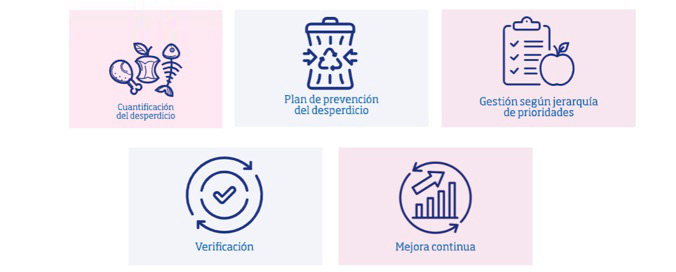
The success of this initiative requires complying with a series of fundamental requirements, such as carrying out a detailed inventory of food waste, identifying its typologies, quantities, as well as the processes or activities that generate it; establishing a mass balance to track the entry and exit of food at all stages of the process; prioritizing actions to reduce waste according to a predefined hierarchy; calculate the percentage of product destined for disposal in relation to total food inputs; develop a comprehensive plan for the minimization of food waste and finally, implement a robust management system to ensure compliance with the established requirements.
Within the methodology to be implemented, it is established that the AENOR Zero Food Waste Certification is based on five fundamentals:
Five fundamentals of the AENOR Zero Food Waste Certification
Commitment. The beauty is in its taste
News
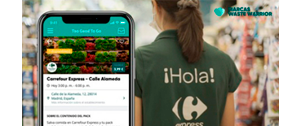
Carrefour joins forces with the Too Good to Go App to combat waste

Four keys to reducing food waste